
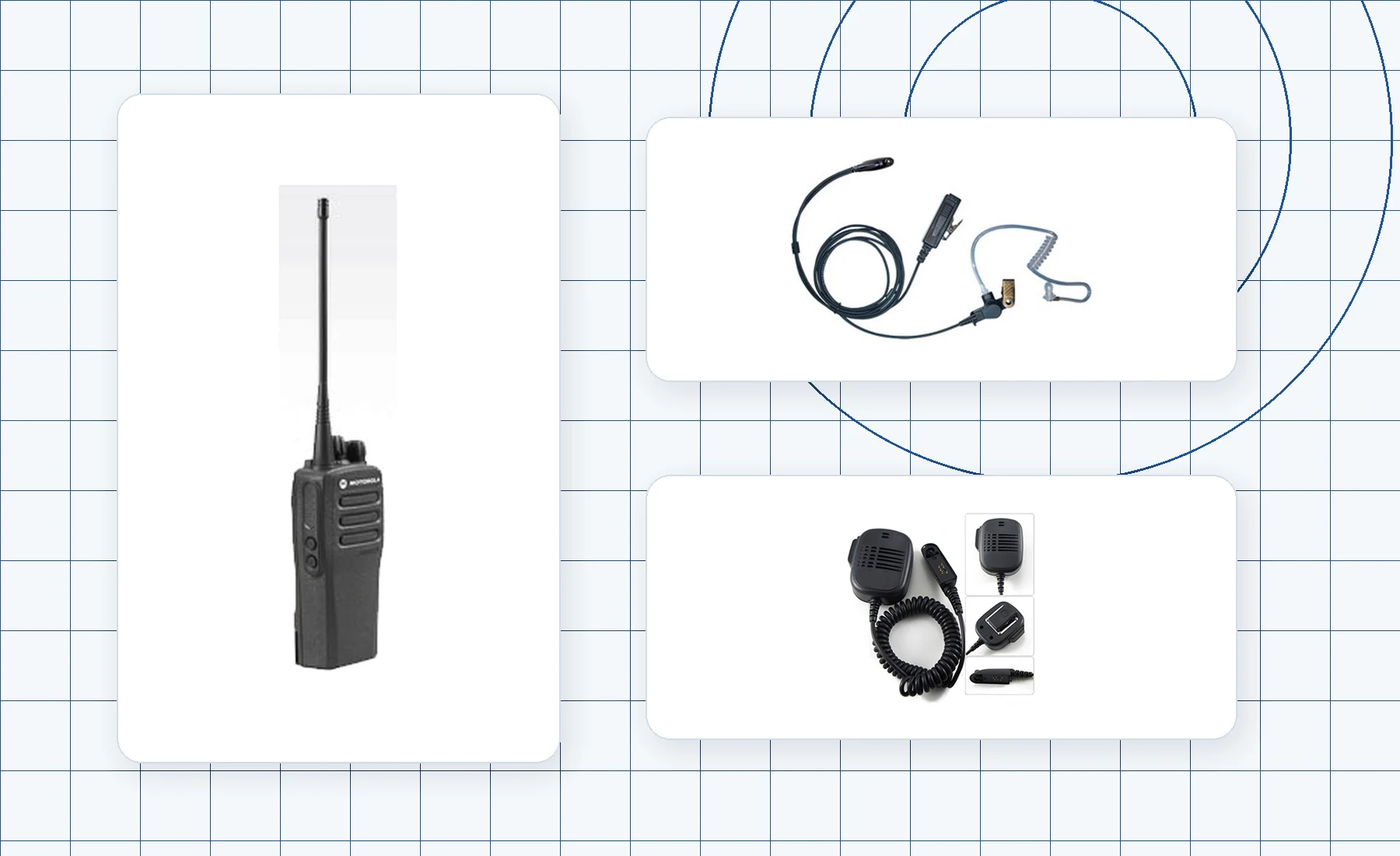
The radio network is designed around the way the team actually works.
The system is defined by roles, zones, shifts, critical communications and RF conditions. Equipment, programming, accessories and infrastructure are treated as one integrated solution.
Access control
Entrances, parking and control points generate short, frequent communications that must immediately reach the responsible team.
Patrols
Movement across multiple zones requires simple PTT operation and reliable coverage at critical points.
Discreet audio
Earpieces, PTT controls and carrying methods are selected according to how discreet communication must be.
Incident communication
A critical message needs a clear path to the responsible person or wider group without becoming mixed with routine traffic.
From the requirement to a configuration verified before operation.
For every solution, the operational requirement is defined before equipment models are selected. This keeps equipment, programming and infrastructure proportionate to the actual need.
Who must hear whom, which messages are critical and where communication bottlenecks occur.
Facility, terrain, obstacles, antennas and the need for repeater infrastructure.
Channels, groups, scan lists, audio, carrying method, batteries and organised charging.
Functional verification, configuration documentation and support after commissioning.
The system is built from several functional layers.
The exact scope depends on the site and operating method. The items below are not a universal package, but a checklist of elements assessed for each project.
Handheld radios
Groups
RF coverage
Support
Organising a security team for a facility or event?
Send the team size, working zones, shifts, need for discreet audio accessories and critical points within the site.